Skip to content

Artificial Intelligence and the Future of Work

AI and Future of Work | Integrum Global
Drawing on insights from the IMF's "Gen-AI: Artificial Intelligence and the Future of Work," this article explores how artificial intelligence is transforming the future of work, presenting both opportunities and challenges. It stresses the necessity of strategic foresight in steering the AI-enhanced economy and underscores the significance of adopting tailored strategies suited to diverse economic landscapes. In addition, this article champions ethical and sustainable AI deployment, advocating for inclusivity and skill development to secure a promising future for all.

As we delve into the intricacies of artificial intelligence (AI) and its implications for the future of work, this tech evolution presents both challenges and opportunities to organisations and individuals. With “the future of work” becoming a buzz phrase, what exactly does it mean? 

The recently released Staff Discussion Note by the International Monetary Fund “Gen-AI: Artificial Intelligence and the Future of Work” (International Monetary Fund, 2024) provides a comprehensive overview, emphasising how AI’s integration into the workforce has the potential to reshape employment structures and economic dynamics globally.

The article outlines a nuanced perspective on AI’s dual impact. On one hand, it highlights the potential for AI to “exacerbate labour income inequality” by disproportionately benefiting high-income workers, underscoring the risk of deepening existing societal divides. On the other hand, it also points to the “productivity gains” AI could usher in, suggesting an uplift in income levels across the board if these technologies are harnessed correctly. 

AI and Future of Work | Integrum Global INsights
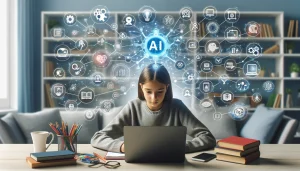
AI may exacerbate income inequality by favouring high-income workers but also has the potential to increase productivity and uplift income levels for all if utilised effectively. Image source: Shutterstock

Drawing from the article, the challenge and opportunity for stakeholders lie in navigating the transition towards an AI-enhanced economy with strategic foresight. “Advanced economies,” the article notes, “are set to face more immediate effects due to their focus on cognitive-intensive jobs,” suggesting a pressing need for these regions to upgrade regulatory frameworks and support mechanisms for labour reallocation.

For emerging markets, the emphasis is on “developing digital infrastructure and skills” to leverage AI for catching up and possibly leapfrogging in the digital economy. This strategic pivot towards inclusivity and skill development is crucial for mitigating the risks associated with AI deployment.

Reflecting on these insights, it becomes apparent that the journey towards an AI-integrated future must be anchored in equity and sustainability. In this context, Integrum Global actively works with the global community to champion ethical and sustainable development and deployment of AI solutions. By ensuring fairness and transparency in AI usage, we aim to make AI technologies accessible to a broader spectrum of society. This commitment, combined with our efforts to equip the workforce with future-ready skill sets in the evolving AI-driven landscape, is vital for ensuring that the future is promising not just for a few, but for most.

The journey towards an AI-integrated future must be anchored in equity and sustainability. Image source: Shutterstock

balanced approach to AI deployment emphasises the importance of “tailored strategies that account for the varying degrees of AI preparedness and exposure across economies.” It’s not just about the technology itself but how it’s integrated into the social fabric, ensuring that the benefits of AI are distributed equitably across the workforce.

The discourse around AI and the future of work is multifaceted, encompassing both the immense potential for growth and the significant challenges of displacement and inequality. As we move forward, the focus must remain on harnessing AI’s capabilities in a manner that fosters inclusion, empowerment, and sustainable development. This will require concerted efforts from policymakers, industry leaders, and the global community to create an ecosystem where AI acts as a lever for positive change, bridging divides rather than deepening them.


Picture of Dr Ke Jinghao

Dr Ke Jinghao

Jinghao holds the position of Chief Research Officer at Integrum Global, where his deep expertise in AI and data analytics propels the company's innovative initiatives. With a solid academic foundation from Singapore Management University (SMU) and proficiency in Python along with various analytics technologies, he plays a pivotal role in steering Integrum Global's strategic direction. Additionally, his ability to develop specialised training programs highlights his versatile skills in the tech domain, making a significant impact on the organisation's growth and innovation. Connect with Jinghao on LinkedIn here.

More Integrum INsights

AI and Sustainability: Building a Greener Logistics Future | Integrum Global

AI and Sustainability: Building a Greener Logistics Future

Sustainability is no longer optional; it???s essential for both businesses and the planet. As climate change intensifies, companies are recognising that long-term success depends on integrating sustainable practices. This shift requires rethinking business models to not only reduce environmental impact but also maintain profitability. From AI-powered solutions in logistics to ethical sourcing and energy optimisation, businesses can enhance efficiency and meet rising consumer and investor demands for eco-conscious practices. Explore how sustainability and innovation intersect to shape a profitable, responsible future.

Generative AI in Facilities Management: A Collaborative Approach to Innovation | Integrum Global

Generative AI in Facilities Management: A Collaborative Approach to Innovation

Generative AI is revolutionising facilities management by offering innovative solutions to complex challenges. From generating optimised building layouts to automating routine tasks, this technology allows facility managers to focus on strategic, high-value activities. At Integrum Global, we emphasise a collaborative approach between human expertise and AI, ensuring that our Gen AI solutions are transparent, intuitive, and aligned with specific operational goals. By combining human creativity with AI’s computational power, facilities management is entering a new era of efficiency, innovation, and sustainability.

Navigating the Changing Landscape of Work: The Importance of Upskilling in the AI Age | Integrum Global

Navigating the Changing Landscape of Work:?? The Importance of Upskilling in the AI Age

The rapid rise of artificial intelligence is revolutionising industries and fundamentally changing the skills needed for success in the 21st century. With automation taking over traditional roles and new positions requiring specialised expertise, both individuals and organisations must prioritise upskilling and reskilling to remain competitive. This article explores the importance of embracing continuous learning, focusing not only on technical skills but also on soft skills like critical thinking and adaptability, which are becoming increasingly valuable in an AI-driven world. As the future of work demands agility and innovation, upskilling emerges as a critical strategy for thriving in the AI age.

Building Low-Carbon Cities: The Role of AI in Urban Sustainability | Integrum Global

Building Low-Carbon Cities: The Role of AI in Urban Sustainability

Artificial Intelligence (AI) is revolutionising how cities address the climate crisis by transforming urban areas into low-carbon, sustainable hubs. From optimising energy use with AI-powered smart grids to enhancing waste management systems with intelligent sorting and collection, AI is helping cities reduce their carbon footprint. Additionally, AI’s role in urban planning and infrastructure maintenance is paving the way for more resilient and efficient cities. Integrum Global is committed to leveraging AI to provide city planners with data-driven insights to foster sustainable urban development and create greener, smarter cities for the future.

More Integrum Insights

AI and Sustainability: Building a Greener Logistics Future | Integrum Global

AI and Sustainability: Building a Greener Logistics Future

Sustainability is no longer optional; it???s essential for both businesses and the planet. As climate change intensifies, companies are recognising that long-term success depends on integrating sustainable practices. This shift requires rethinking business models to not only reduce environmental impact but also maintain profitability. From AI-powered solutions in logistics to ethical sourcing and energy optimisation, businesses can enhance efficiency and meet rising consumer and investor demands for eco-conscious practices. Explore how sustainability and innovation intersect to shape a profitable, responsible future.

Generative AI in Facilities Management: A Collaborative Approach to Innovation | Integrum Global

Generative AI in Facilities Management: A Collaborative Approach to Innovation

Generative AI is revolutionising facilities management by offering innovative solutions to complex challenges. From generating optimised building layouts to automating routine tasks, this technology allows facility managers to focus on strategic, high-value activities. At Integrum Global, we emphasise a collaborative approach between human expertise and AI, ensuring that our Gen AI solutions are transparent, intuitive, and aligned with specific operational goals. By combining human creativity with AI’s computational power, facilities management is entering a new era of efficiency, innovation, and sustainability.

Navigating the Changing Landscape of Work: The Importance of Upskilling in the AI Age | Integrum Global

Navigating the Changing Landscape of Work:?? The Importance of Upskilling in the AI Age

The rapid rise of artificial intelligence is revolutionising industries and fundamentally changing the skills needed for success in the 21st century. With automation taking over traditional roles and new positions requiring specialised expertise, both individuals and organisations must prioritise upskilling and reskilling to remain competitive. This article explores the importance of embracing continuous learning, focusing not only on technical skills but also on soft skills like critical thinking and adaptability, which are becoming increasingly valuable in an AI-driven world. As the future of work demands agility and innovation, upskilling emerges as a critical strategy for thriving in the AI age.

Ready to Embark on your Digital Transformation?