Skip to content

Reimagining Talent in the Age of AI: Building a Future-Ready Workforce

Reimagining Talent in the Age of AI: Building a Future-Ready Workforce | Integrum Global
The rapid rise of AI is transforming industries and redefining the skills needed for success in the 21st century. In Singapore, the shift from static job roles to adaptable skills is critical as AI automates routine tasks. Organisations must prioritise continuous learning and foster human-centric "power skills" like critical thinking, collaboration, and creativity. As AI and human ingenuity combine, businesses can thrive by embracing AI-powered learning, cultivating data literacy, and building a culture of agility. This article delves into the strategies needed to build a resilient, future-ready workforce in Singapore.

The Age of AI and the Urgency of Workforce Transformation in Singapore

The impact of Artificial Intelligence (AI) is redefining every aspect of business, including how we manage and cultivate talent. As Ryan Roslansky, CEO of LinkedIn, notes in his Harvard Business Review article, “Talent Management in the Age of AI,” organisations face the urgent need to adapt traditional workforce strategies and embrace the reality that “the old playbooks will not work”. The Age of AI isn’t simply a technological shift; it is a catalyst for human evolution in the workplace. The most successful businesses won’t be those desperately trying to replace human workers with AI, but those that understand how AI and human ingenuity can work together, creating a force far more powerful than either alone.

From Static Job Titles to Adaptable Skills

One of the most fundamental changes AI demands is the need to deconstruct traditional job descriptions. Organisations need to move beyond rigid titles that confine employees and their talents. Instead, they must embrace the notion of roles consisting of dynamic skills and tasks.

Why is this crucial? As AI rapidly automates routine tasks, the skills required for success will constantly evolve. Businesses that fixate on static job definitions risk having entire positions rendered obsolete. Organisations in Singapore particularly need to prioritise mapping and cultivating adaptable skill sets to foster employee resilience and enable them to thrive in an ever-evolving landscape. This aligns well with the SkillsFuture initiative by the Singapore government, empowering individuals to take charge of their career development.
Reimagining Talent in the Age of AI: Building a Future-Ready Workforce | Integrum Global
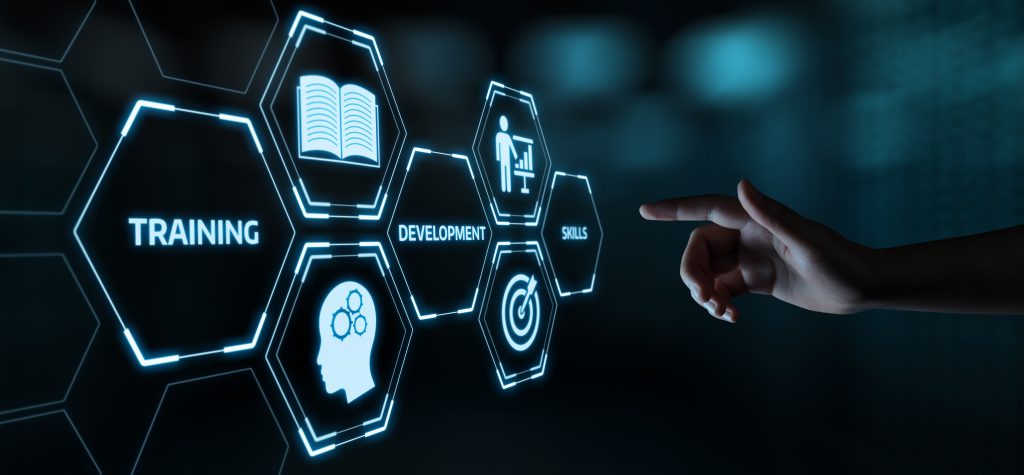
Organisations should shift beyond fixed job titles to flexible roles defined by evolving skills and tasks.

AI-Powered Learning and the End of "One-Time" Training

The Age of AI calls for an end to “one-and-done” training models. Companies in Singapore must embrace a culture of continuous learning and upskilling, facilitated by the remarkable power of AI. As Roslansky points out, artificial intelligence tools offer hyper-personalised learning plans and real-time recommendations for employees based on their current skills, career aspirations, and evolving needs.

Here are a few exciting ways AI is transforming learning and development:

  • Adaptive Practice: AI-powered learning platforms can tailor practice questions based on the individual’s performance, ensuring constant improvement, and identifying areas for focus.
  • Microlearning: Bite-sized learning modules woven into the natural workflow, allowing for skill acquisition without disrupting workdays (a valuable approach within Singapore’s fast-paced work environment).
  • Gamification: AI can incorporate games and simulations into the learning process, enhancing engagement and making skill development an enjoyable experience.
Reimagining Talent in the Age of AI: Building a Future-Ready Workforce | Integrum Global
AI is transforming learning and development through adaptive practice, microlearning and gamification.

Prioritising 'Power Skills' in a World of Machines

The jobs of the future won’t simply favour those with the most technical skills. Leaders in Singapore need to foster an environment emphasising distinctively human capabilities – the skills least likely to be fully replicated by AI. Roslansky refers to these as “power skills.” These include:

  • Critical Thinking: AI may excel at analysing data, but it cannot replace the nuanced problem-solving and evaluation that humans bring.
  • Collaboration and Communication: Successfully working in teams, conveying information effectively, and cultivating relationships are increasingly important with human-AI partnerships dominating the workplace.
  • Creativity and Innovation: AI can assist and optimise, but the spark of new ideas, unconventional solutions, and artistic expression remains uniquely human.
 

Building a Culture of AI Agility

Businesses in Singapore that succeed in the Age of AI understand the need to operate in a constant state of learning and adaptation. This cultural transformation must be championed by leaders committed to:

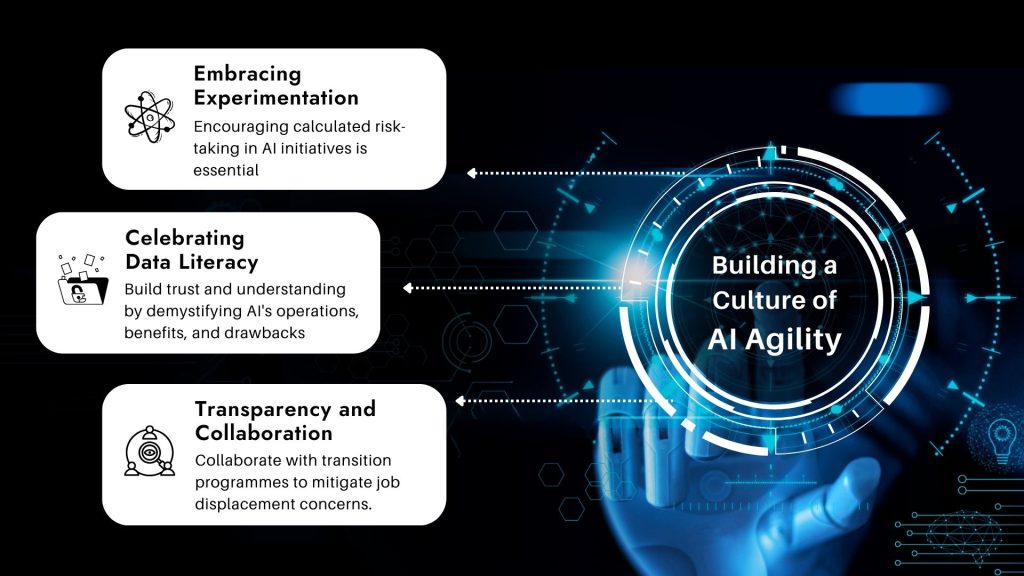
  • Embracing Experimentation: Fostering an environment where calculated risk-taking with AI-powered initiatives is encouraged is vital.
  • Celebrating Data Literacy: Demystify AI and build trust by promoting greater understanding of how AI works, its benefits, and its potential drawbacks among employees.
  • Transparency and Collaboration: Openly address concerns about job displacement, partnering with programs like Adapt & Grow to manage AI-related workforce transitions.
 
Reimagining Talent in the Age of AI: Building a Future-Ready Workforce | Integrum Global
Building a culture of AI agility requires businesses to commit to embracing experimentation, celebrating data literacy and transparency and collaboration.

The Future of Talent: Collaboration and Continuous Advancement

The businesses that thrive in the Age of AI won’t be those chasing the illusory goal of a fully automated workforce. True success will lie in the strategic combination of human ingenuity with the power of AI. At Integrum Global, we aim to empower teams with future-ready skill sets towards mastery in the evolving AI-driven landscape. It’s time to boldly rethink our approaches to talent management. Let’s focus on adaptable skills, embrace AI-powered learning, and champion human-centric skills – this is how we create a resilient, future-ready workforce in Singapore.


Picture of Integrum Global

Integrum Global

More Integrum INsights

AI and Sustainability: Building a Greener Logistics Future | Integrum Global

AI and Sustainability: Building a Greener Logistics Future

Sustainability is no longer optional; it???s essential for both businesses and the planet. As climate change intensifies, companies are recognising that long-term success depends on integrating sustainable practices. This shift requires rethinking business models to not only reduce environmental impact but also maintain profitability. From AI-powered solutions in logistics to ethical sourcing and energy optimisation, businesses can enhance efficiency and meet rising consumer and investor demands for eco-conscious practices. Explore how sustainability and innovation intersect to shape a profitable, responsible future.

Generative AI in Facilities Management: A Collaborative Approach to Innovation | Integrum Global

Generative AI in Facilities Management: A Collaborative Approach to Innovation

Generative AI is revolutionising facilities management by offering innovative solutions to complex challenges. From generating optimised building layouts to automating routine tasks, this technology allows facility managers to focus on strategic, high-value activities. At Integrum Global, we emphasise a collaborative approach between human expertise and AI, ensuring that our Gen AI solutions are transparent, intuitive, and aligned with specific operational goals. By combining human creativity with AI’s computational power, facilities management is entering a new era of efficiency, innovation, and sustainability.

Navigating the Changing Landscape of Work: The Importance of Upskilling in the AI Age | Integrum Global

Navigating the Changing Landscape of Work:?? The Importance of Upskilling in the AI Age

The rapid rise of artificial intelligence is revolutionising industries and fundamentally changing the skills needed for success in the 21st century. With automation taking over traditional roles and new positions requiring specialised expertise, both individuals and organisations must prioritise upskilling and reskilling to remain competitive. This article explores the importance of embracing continuous learning, focusing not only on technical skills but also on soft skills like critical thinking and adaptability, which are becoming increasingly valuable in an AI-driven world. As the future of work demands agility and innovation, upskilling emerges as a critical strategy for thriving in the AI age.

Building Low-Carbon Cities: The Role of AI in Urban Sustainability | Integrum Global

Building Low-Carbon Cities: The Role of AI in Urban Sustainability

Artificial Intelligence (AI) is revolutionising how cities address the climate crisis by transforming urban areas into low-carbon, sustainable hubs. From optimising energy use with AI-powered smart grids to enhancing waste management systems with intelligent sorting and collection, AI is helping cities reduce their carbon footprint. Additionally, AI’s role in urban planning and infrastructure maintenance is paving the way for more resilient and efficient cities. Integrum Global is committed to leveraging AI to provide city planners with data-driven insights to foster sustainable urban development and create greener, smarter cities for the future.

More Integrum Insights

AI and Sustainability: Building a Greener Logistics Future | Integrum Global

AI and Sustainability: Building a Greener Logistics Future

Sustainability is no longer optional; it???s essential for both businesses and the planet. As climate change intensifies, companies are recognising that long-term success depends on integrating sustainable practices. This shift requires rethinking business models to not only reduce environmental impact but also maintain profitability. From AI-powered solutions in logistics to ethical sourcing and energy optimisation, businesses can enhance efficiency and meet rising consumer and investor demands for eco-conscious practices. Explore how sustainability and innovation intersect to shape a profitable, responsible future.

Generative AI in Facilities Management: A Collaborative Approach to Innovation | Integrum Global

Generative AI in Facilities Management: A Collaborative Approach to Innovation

Generative AI is revolutionising facilities management by offering innovative solutions to complex challenges. From generating optimised building layouts to automating routine tasks, this technology allows facility managers to focus on strategic, high-value activities. At Integrum Global, we emphasise a collaborative approach between human expertise and AI, ensuring that our Gen AI solutions are transparent, intuitive, and aligned with specific operational goals. By combining human creativity with AI’s computational power, facilities management is entering a new era of efficiency, innovation, and sustainability.

Navigating the Changing Landscape of Work: The Importance of Upskilling in the AI Age | Integrum Global

Navigating the Changing Landscape of Work:?? The Importance of Upskilling in the AI Age

The rapid rise of artificial intelligence is revolutionising industries and fundamentally changing the skills needed for success in the 21st century. With automation taking over traditional roles and new positions requiring specialised expertise, both individuals and organisations must prioritise upskilling and reskilling to remain competitive. This article explores the importance of embracing continuous learning, focusing not only on technical skills but also on soft skills like critical thinking and adaptability, which are becoming increasingly valuable in an AI-driven world. As the future of work demands agility and innovation, upskilling emerges as a critical strategy for thriving in the AI age.

Ready to Embark on your Digital Transformation?