Skip to content

Revolutionising Mobility: Bridging Capability Gaps with Human-AI Synergy

Revolutionising Mobility: Bridging Capability Gap | Integrum Global
In the midst of rapid digital transformation, the transportation and logistics sectors are undergoing an unprecedented evolution. This blog delves into the strategic integration of human intelligence and AI, illustrating their pivotal role in revolutionising operations towards a sustainable and efficient future of mobility.

Introduction

Amidst the dynamic landscape of the modern digital era, the transportation and logistics sectors are undergoing swift and profound transformation. Within this industry characterised by ubiquitous and hyper-connected processes, the imperative for sustainable, efficient, and adaptable solutions that aligns with consumer expectations has raised to a paramount status. Central to this transformative journey lies the strategic convergence of human intelligence and the power of AI. This fusion seeks to bridge capability gaps and establish harmonious interactions between humans and AI systems, to enhance the processes within the transportation and logistics industry. In the following section, we delve into the guiding principles that are intricately shaping the future of mobility.

Human-AI Interaction: The Heart of Modern Mobility

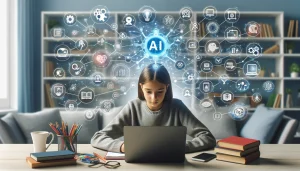
The synergy between human intelligence and AI is pivotal in this new age of transportation. 

With the transportation landscape evolving at an unprecedented pace, rapid decision-making and adaptability is demanded. This is where AI’s ability to process vast amounts of data and derive insights in real-time can empower humans with timely and accurate information, aiding in efficient route planning, traffic management, and resource optimisation.

While AI enhances automation, human intuition remains invaluable in complex and unpredictable scenarios. Human intelligence can provide contextual understanding, ethical decision-making, and the ability to handle exceptional cases that AI might not anticipate. This collaboration ensures a balanced approach to problem-solving, where AI augments human capabilities and vice versa.

Furthermore, as the industry shifts towards sustainability, the synergy between human intelligence and AI can drive eco-friendly practices. Humans can guide AI systems to make environmentally conscious decisions, optimising fuel consumption, reducing emissions, and enhancing overall efficiency. Ultimately, the interaction between human intelligence and AI fosters a comprehensive approach to transportation challenges, merging data-driven precision with human judgement and adaptability to create a safer, more efficient, and sustainable future of mobility.

To sum up, the collaboration between human intelligence and AI offers:

      • Adaptive Learning

Unlike traditional rule-based systems that require pre-defined conditions, modern solutions learn from historical data and future interactions to constantly evolve and improve

      • Graphical Interfaces for Enhanced Collaboration

This allows solution and product managers to piece together solutions rapidly, ensuring that development efforts are parallelised while systemic errors are minimised

      • Real-time Data Translation

By focusing on real-time data translation from various sources to the solution, we eliminate time-consuming data unification efforts, leading to faster, more efficient outcomes

Revolutionising Mobility: Bridging Capability Gaps with Human-AI Synergy | Integrum Global
Synergistic potential of combining human intelligence and AI

Bridging Capability Gaps: A New Approach to Mobility

Traditional mobility solutions have typically functioned in isolated compartments, which results in inefficiencies and inadvertently overlooking potential opportunities. The contemporary strategy, however, centres on recognising and rectifying any voids in capabilities spanning the entirety of the enterprise value chain. By adopting this comprehensive approach, two significant outcomes are achieved.

Firstly, the enhancement of value propositions. By directing attention to the holistic value chain, as opposed to isolated functional enhancements, the avenue is paved for the conception of novel and inventive value propositions tailored for end-users. This can result in the creation of entirely new value streams that cater to evolving user needs.

Secondly, the propulsion of rapid experimentation. This approach involves a shift away from extensive endeavours invested in gathering requirements and overhauling processes. Instead, the focal point becomes swift and iterative experimentation. This agile methodology facilitates the exploration of uncharted territory, leading to the uncovering of hitherto unseen value propositions and the creation of personalised solutions that resonate more deeply with users.

Sustainability: At the Core of the New Mobility Paradigm

Sustainability has transitioned from a mere buzzword into an unequivocal imperative. The synergy between AI and human intelligence within mobility solutions hence presents a strategic response to the multifaceted challenges posed by Scope 1, 2, and 3 emissions:

   1. Direct Emissions Reduction

The incorporation of electric and non-fossil fuel-based transportation solutions stands as a significant stride towards the curtailment of direct emissions. By embracing these eco-conscious alternatives, the transportation industry actively contributes to reducing the carbon footprint, which fosters a more environmentally responsible ecosystem.

   2. Minimising Indirect Emissions

The fusion of AI and human intelligence provides a potent toolkit to tackle the challenge of indirect emissions. By harnessing data-driven insights, the transportation sector can ensure sustainable energy utilisation. This strategic alignment not only minimises indirect emissions but also amplifies the efficiency of energy usage, establishing a foundation for a sustainable and environmentally conscious mobility landscape.

   3. Optimising the Value Chain

The integration of AI solutions holds transformative potential for optimising the entire value chain. Techniques such as route optimisation and demand forecasting, empowered by AI, yield intricate insights that enable smarter decisions, thereby reducing indirect emissions. This holistic approach not only enhances operational efficiency but also aligns with the imperative of environmental sustainability.

Revolutionising Mobility: Bridging Capability Gaps with Human-AI Synergy | Integrum Global
Strategic responses to the multifaceted challenges posed by Scope 1, 2, and 3 emissions

In essence, the harmonious blend of AI and human intelligence illuminates a path towards a more sustainable and ecologically balanced future for the mobility sector.

Conclusion

The principles of bridging capability gaps and fostering harmonious human-AI synergy are profoundly influencing the mobility sector. Its impact goes beyond the present, laying the groundwork for a future where transportation embodies sustainability, efficiency, and continual advancement. As we progress, these very principles will serve as our compass, ensuring that every stride we make propels us towards a brighter and greener future.

Picture of Integrum Global

Integrum Global

Picture of Integrum Global

Integrum Global

More Integrum INsights

AI and Sustainability: Building a Greener Logistics Future | Integrum Global

AI and Sustainability: Building a Greener Logistics Future

Sustainability is no longer optional; it???s essential for both businesses and the planet. As climate change intensifies, companies are recognising that long-term success depends on integrating sustainable practices. This shift requires rethinking business models to not only reduce environmental impact but also maintain profitability. From AI-powered solutions in logistics to ethical sourcing and energy optimisation, businesses can enhance efficiency and meet rising consumer and investor demands for eco-conscious practices. Explore how sustainability and innovation intersect to shape a profitable, responsible future.

Generative AI in Facilities Management: A Collaborative Approach to Innovation | Integrum Global

Generative AI in Facilities Management: A Collaborative Approach to Innovation

Generative AI is revolutionising facilities management by offering innovative solutions to complex challenges. From generating optimised building layouts to automating routine tasks, this technology allows facility managers to focus on strategic, high-value activities. At Integrum Global, we emphasise a collaborative approach between human expertise and AI, ensuring that our Gen AI solutions are transparent, intuitive, and aligned with specific operational goals. By combining human creativity with AI’s computational power, facilities management is entering a new era of efficiency, innovation, and sustainability.

Navigating the Changing Landscape of Work: The Importance of Upskilling in the AI Age | Integrum Global

Navigating the Changing Landscape of Work:?? The Importance of Upskilling in the AI Age

The rapid rise of artificial intelligence is revolutionising industries and fundamentally changing the skills needed for success in the 21st century. With automation taking over traditional roles and new positions requiring specialised expertise, both individuals and organisations must prioritise upskilling and reskilling to remain competitive. This article explores the importance of embracing continuous learning, focusing not only on technical skills but also on soft skills like critical thinking and adaptability, which are becoming increasingly valuable in an AI-driven world. As the future of work demands agility and innovation, upskilling emerges as a critical strategy for thriving in the AI age.

Building Low-Carbon Cities: The Role of AI in Urban Sustainability | Integrum Global

Building Low-Carbon Cities: The Role of AI in Urban Sustainability

Artificial Intelligence (AI) is revolutionising how cities address the climate crisis by transforming urban areas into low-carbon, sustainable hubs. From optimising energy use with AI-powered smart grids to enhancing waste management systems with intelligent sorting and collection, AI is helping cities reduce their carbon footprint. Additionally, AI’s role in urban planning and infrastructure maintenance is paving the way for more resilient and efficient cities. Integrum Global is committed to leveraging AI to provide city planners with data-driven insights to foster sustainable urban development and create greener, smarter cities for the future.

More Integrum Insights

AI and Sustainability: Building a Greener Logistics Future | Integrum Global

AI and Sustainability: Building a Greener Logistics Future

Sustainability is no longer optional; it???s essential for both businesses and the planet. As climate change intensifies, companies are recognising that long-term success depends on integrating sustainable practices. This shift requires rethinking business models to not only reduce environmental impact but also maintain profitability. From AI-powered solutions in logistics to ethical sourcing and energy optimisation, businesses can enhance efficiency and meet rising consumer and investor demands for eco-conscious practices. Explore how sustainability and innovation intersect to shape a profitable, responsible future.

Generative AI in Facilities Management: A Collaborative Approach to Innovation | Integrum Global

Generative AI in Facilities Management: A Collaborative Approach to Innovation

Generative AI is revolutionising facilities management by offering innovative solutions to complex challenges. From generating optimised building layouts to automating routine tasks, this technology allows facility managers to focus on strategic, high-value activities. At Integrum Global, we emphasise a collaborative approach between human expertise and AI, ensuring that our Gen AI solutions are transparent, intuitive, and aligned with specific operational goals. By combining human creativity with AI’s computational power, facilities management is entering a new era of efficiency, innovation, and sustainability.

Navigating the Changing Landscape of Work: The Importance of Upskilling in the AI Age | Integrum Global

Navigating the Changing Landscape of Work:?? The Importance of Upskilling in the AI Age

The rapid rise of artificial intelligence is revolutionising industries and fundamentally changing the skills needed for success in the 21st century. With automation taking over traditional roles and new positions requiring specialised expertise, both individuals and organisations must prioritise upskilling and reskilling to remain competitive. This article explores the importance of embracing continuous learning, focusing not only on technical skills but also on soft skills like critical thinking and adaptability, which are becoming increasingly valuable in an AI-driven world. As the future of work demands agility and innovation, upskilling emerges as a critical strategy for thriving in the AI age.

Ready to Embark on your Digital Transformation?